


-
Table of Contents
- What Is Roof Waterproofing?
What Is Roof Waterproofing?
Why Is Roof Waterproofing Important?
- Keep the roof from leaking during the rainy season.
- Preventing moisture damage to ceilings, walls and interior finishes.
- Minimizing moisture damage to concrete.
- Assisting in mould control in moist locations.
- Increasing the durability of roofs and minimizing unnecessary repair costs.
Types of Roof Waterproofing Methods
Choosing the right waterproofing method depends on roof condition, budget, and weather exposure. The most commonly used methods include:
- Liquid Waterproofing Membrane
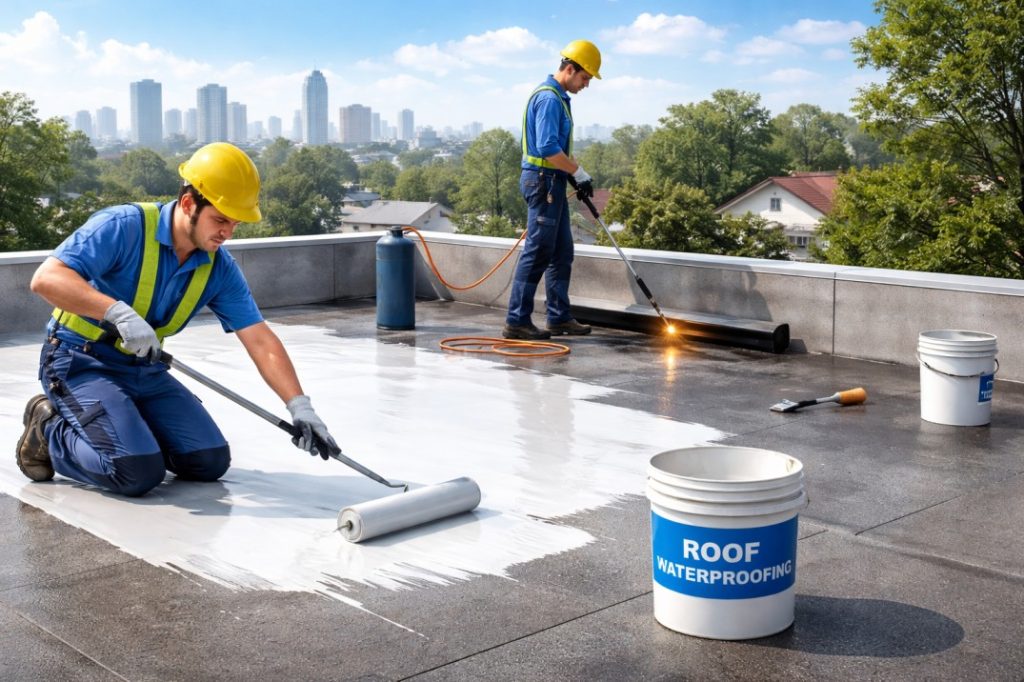
This is a flexible liquid coating applied using a roller or spray. Once cured, it forms a seamless rubber-like layer that adapts to roof movement and prevents cracks. - Bituminous Membrane
Widely used for flat roofs, this method provides strong resistance against water and weather. It is durable and suitable for areas with heavy rainfall. - Cementitious Waterproofing
Easy to apply and cost-effective, cement-based waterproofing is commonly used for terraces and concrete roofs. It works well for internal moisture protection. - Polyurethane Waterproofing
Known for high elasticity and durability, polyurethane coatings are ideal for roofs exposed to extreme weather conditions. They offer long-lasting protection when applied professionally. - Acrylic Coating
Acrylic coatings reflect heat and reduce roof temperature while offering water resistance. These are popular for terrace waterproofing in residential buildings.
Benefits of Roof Waterproofing
Proper roof waterproofing offers multiple long-term benefits:
- Prevents water leakage and dampness
- Protects the building structure from corrosion and cracks
- Increases the overall life of the property
- Reduces expensive repair and maintenance costs
- Improves indoor comfort by controlling humidity and heat
Investing in roof waterproofing today can help avoid major structural issues in the future.
Common Causes of Roof Leakage
Understanding the causes of leakage helps in choosing the right roof leakage solution. Some common reasons include:
- Cracks in concrete due to thermal expansion
- Poor drainage causing water stagnation
- Aging construction materials
- Continuous exposure to rain and sunlight
- Faulty waterproofing during construction
Ignoring these issues can lead to severe damage over time.
Best Roof Waterproofing Solutions in 2026
In 2026, modern waterproofing focuses on durability and technology. Advanced polymer-based coatings, UV-resistant membranes, and eco-friendly materials are widely used. These solutions provide better flexibility, longer life, and stronger adhesion compared to traditional methods.
Professional application has become essential, as modern materials require correct surface preparation, thickness control, and curing time. Choosing the right solution ensures long-lasting protection and peace of mind.
Why Professional Waterproofing Services Are Important
Many homeowners attempt DIY waterproofing to save money, but this often leads to temporary results. Professional waterproofing services offer proper inspection, correct material selection, and expert application.
While DIY methods may last one season, professionally applied waterproofing can protect your roof for years. If you are searching for waterproofing services near me, choosing experienced professionals ensures quality workmanship and reliable results.
Preventive Roof Waterproofing Tips
To maintain a waterproof roof, follow these simple tips:
- Inspect the roof before and after monsoon season
- Clean debris and ensure proper water drainage
- Repair small cracks immediately
- Avoid heavy loads on the terrace
- Schedule professional inspections regularly
Preventive care helps extend the effectiveness of roof waterproofing systems.
FAQs
Q1. How long does roof waterproofing last?
Depending on the method used, roof waterproofing can last 5–15 years with proper maintenance.
Q2. Which waterproofing method is best for concrete roofs?
Liquid membranes and polyurethane coatings are highly effective for concrete roofs.
Q3. Is roof waterproofing necessary for new buildings?
Yes, early waterproofing prevents future leakage and structural damage.
Q4. Can roof waterproofing stop existing leaks?
Yes, when applied correctly after repairing cracks and weak areas.
Q5. What is the best time to do roof waterproofing?
Before the monsoon season is ideal for best results.